Komaruya Sumii
91-54 Enshouji-cho Okazaki Sakyo-ku KYOTO JAPAN TEL: 075-771-2229 FAX: 075-761-1101e-mail: info@komaruya.jp


These are all handmade by craftsmen who maintain the traditions of the art.
We would like you to use it as household commodities or as ornaments.
The Fukakusa Uchiwa was a popular fan all over Japan in the Edo period. Komaruya , a traditional fan maker with a rich history, has reproduced this important cultural item. The new"Shin-Fukakusa Uchiwa" is a modern arrangement , depicting classic scenes of Kyoto with the addition of color and gold leaf. Other fans show scenes of the Osaka, Edo and Ohmi areas.
The surface of the fan becomes a canvas for the artist's world to expand. Each work is full of the artist's heart and soul, drawing you in.
Plants and flowers of the four seasons are drawn in gold leaf. The luxurious designs are evocative of the Rinpa school of artists from the Edo period.
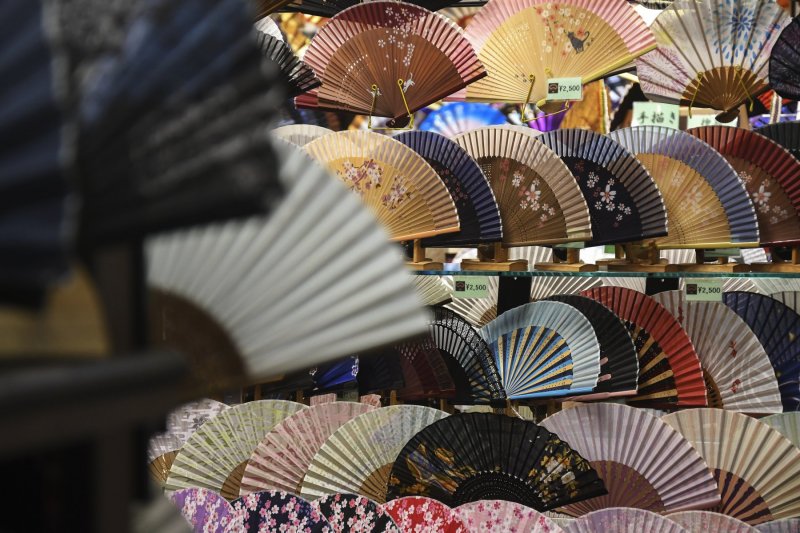
Uchiwa fans made with genuine silk dyed in the Kyo Yuzen style or with elaborately woven Kimono sashes. Perfect for room interiors, or as gifts.
The light and dark of the sumi ink gives these prints their unique flavors. Enjoy the variety of scenes, from the quiet to the lively.
Designs cut using specialized techniques have opened new doors. A traditional, but modern fan that will no doubt become one that represents our work.
Every year , Kyoto's geikos and maikos give these round fans to patrons as summer greetings. With a crest on the front and a name on the back, a Kyomaru fan is one of the symbols of Kyoto.
Props and fans used on the stage of Japanese classical dance, a traditional performing art . We select props according to historical accuracy, costumes and wigs, even the layout of the stage. For everything from classic to modern works, let us help you with our knowledge.
Since the Momoyama period, the abundant bamboo groves in the village of Fukakusa, in the Fushimi area of Kyoto meant mosquitoes were a large nuisance. Gensei Shonin, the priest of the local Zuikoji Temple, created a fan that was slightly taller than the Nara uchiwa fan, designed to keep mosquitoes at bay. A friend of the priest, through a mutual interest in Tanka poetry, was an ancestor of the Sumii family, and he manufactured this "Gensei-style Fukakusa Uchiwa" using real Fukakusa bamboo. This was well-received in Kyoto and the rest of the country. The Sumii family was known as the manufacturer and seller of the "Fukakusa Uchiwa" since 1624, but from around 1660, became the birthplace of the "Gensei-style Fukakusa Uchiwa", a new original product. Gifu prefecture's "Gifu Uchiwa" fans of today initially came from the Komaruya business from a hundred years ago.
In 1812, after generations of continuing the "Komaruya Zentaro" name, the name was officially changed to "Sumii" after the fourth generation, and it was during this time that Mai Ougi dancing fans and Natsu Sensu small summer fans were begun to be sold. After the Pacific War, the eighth generation started specializing in props for Japanese traditional dance, and today, Komaruya provides support for Kyoto's spring geiko and maiko dances, the "Miyako Odori", the "Kyo Odori" and the "Kamogawa Odori", as well as for a variety of different styles of dance performances all over the country.
Since this fan was once used for sending mosquitos away, and sending a breeze to parents in sizzling hot weather during summers in Kyoto. We would like you purge noxious vapar, bad luck away and send a gentle breeze to someone whom you love with this fan.